Home Loan Balance Transfer — Complete Guide to Saving Lakhs in 2026
A home loan balance transfer can cut your EMI by ₹2,000–₹6,000 a month and save ₹3–8 lakh in total interest. Here's the step-by-step process, exact costs, and when it's not worth it.
Key Takeaways
- A 0.6% rate reduction on a ₹40 lakh loan with 12 years remaining saves ₹1.94 lakh in total interest — break-even in approximately 13 months.
- Foreclosure charges on floating-rate loans are banned by RBI — your current lender cannot charge you to leave.
- The best time to transfer is in the first 40% of your loan tenure, when interest still dominates each EMI.
- Always negotiate with your current lender first — they often match or come close to the competitor's rate without paperwork.
A home loan balance transfer is the single most powerful tool an Indian homeowner has to reduce the total cost of their loan. You take your outstanding loan balance from a high-rate lender and move it to a lender offering a lower rate — reducing either your EMI or your remaining tenure in one step.
In 2026, with home loan rates ranging from 8.40% to 9.65% across major lenders, even a 50 basis point spread represents lakhs of rupees in savings over a 15–20 year residual tenure.
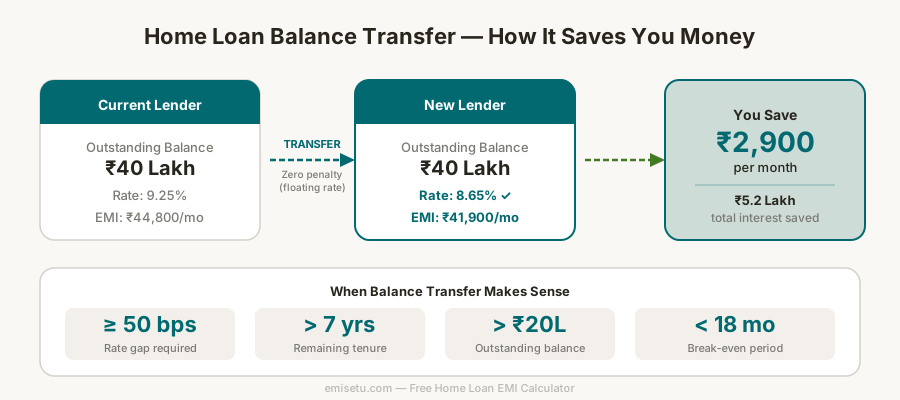
What Is a Home Loan Balance Transfer?
A balance transfer (also called a "home loan takeover" or "refinancing") moves your outstanding home loan principal from your current bank to a new bank that offers a better interest rate. You do not restart the loan — the new lender repays your current lender and takes over the existing outstanding amount.
The result: you now repay the same outstanding principal to the new lender at a lower rate, with either a lower EMI or a shorter remaining tenure.
When a Balance Transfer Makes Financial Sense
Not every rate difference justifies a transfer. The key variables are:
| Factor | Threshold to Justify Transfer |
|---|---|
| Rate gap | ≥ 50 bps (0.50%) after all costs |
| Outstanding balance | ≥ ₹20 lakh |
| Remaining tenure | ≥ 7 years |
| Break-even period | ≤ 18 months |
The break-even calculation
Transfer cost (processing fee + legal charges + stamp duty) ÷ Monthly saving = Break-even months
Example: ₹40 lakh outstanding, current rate 9.25%, new rate 8.65%.
- Monthly EMI saving: ~₹1,350
- Total transfer cost: ~₹18,000
- Break-even: 18,000 ÷ 1,350 = ~13 months
After 13 months, every rupee saved is net gain.
Step-by-Step Balance Transfer Process
Step 1: Get a competing offer in writing
Contact 2–3 lenders — SBI, HDFC Bank, ICICI Bank, or Axis Bank — and request a balance transfer sanction letter. You need the actual offer in writing (rate, processing fee, tenure) before approaching your current lender. Check current home loan rates across banks to identify which lenders are offering the most competitive spreads.
Step 2: Negotiate with your current lender
Take the competing offer to your existing lender's home loan retention team. In many cases, they will:
- Match the competitor's rate (rate reset)
- Reduce rate by 25–50 bps without a full transfer
- Waive the rate reset fee as a retention offer
If they match: accept. You save the transfer paperwork and get a lower rate instantly. If they don't come close enough, proceed with the transfer.
Step 3: Submit the balance transfer application
Provide the new lender with:
- Loan account statements from current lender (last 12 months)
- Sanction letter from current lender
- List of original property documents held by current lender
- Income documents (salary slips / ITR), KYC, property papers
Step 4: Current lender issues foreclosure letter
The new lender issues a cheque/NEFT to your current lender for the outstanding principal. Your current lender issues a No Objection Certificate (NOC) and returns all original property documents.
Critical: For floating-rate loans to individual borrowers, lenders cannot charge foreclosure or prepayment penalties. This is governed by the RBI (Pre-payment Charges on Loans) Directions, 2025 (issued July 2, 2025, effective January 1, 2026), which applies uniformly to all commercial banks, co-operative banks, and NBFCs. If your lender tries to charge a foreclosure fee on a floating-rate loan, cite these Directions in your written complaint.
Step 5: New lender creates the loan
The new lender registers the mortgage on your property, sets up your EMI mandate, and the loan begins with the new lender at the agreed rate.
Total timeline: 15–30 business days for a straightforward transfer.
Detailed Cost Breakdown
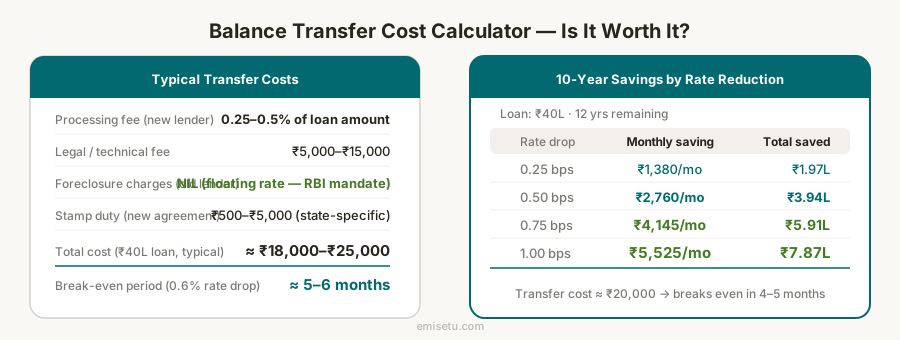
| Cost Item | Typical Amount | Notes |
|---|---|---|
| New lender processing fee | 0.25–0.5% of loan | Often negotiable or waived in festive offers |
| Legal / technical valuation | ₹8,000–₹15,000 | New lender's empanelled lawyer |
| Stamp duty on new agreement | ₹500–₹5,000 | State-specific; Maharashtra is higher |
| Foreclosure charges (current lender) | ₹0 | Banned by RBI for floating-rate loans |
| Franking / registration | ₹1,000–₹3,000 | Where applicable |
| Total typical cost | ₹18,000–₹30,000 | For a ₹40–60 lakh loan |
How Much You Actually Save
At 9.25% current rate, for different outstanding balances with 12 years remaining:
| Outstanding Balance | New Rate | Monthly Saving | Total Interest Saved | Break-even |
|---|---|---|---|---|
| ₹25 lakh | 8.65% | ₹844 | ₹1.22 lakh | ~17 months |
| ₹40 lakh | 8.65% | ₹1,350 | ₹1.94 lakh | ~13 months |
| ₹60 lakh | 8.65% | ₹2,024 | ₹2.91 lakh | ~11 months |
| ₹80 lakh | 8.65% | ₹2,700 | ₹3.89 lakh | ~10 months |
Use our home loan EMI calculator to model the before-and-after EMI for your specific numbers.
EMI Reduction vs Tenure Reduction — Which to Choose?
When you transfer, the new lender will ask: do you want the same EMI (reducing tenure) or the same tenure (reducing EMI)?
| Option | Choose if... | Effect |
|---|---|---|
| Reduce EMI, same tenure | You want immediate cash flow relief | Lower monthly outgo, same total time |
| Keep EMI, reduce tenure | You can maintain the current EMI | Loan ends faster, saves more interest |
Recommendation: If your current EMI is comfortable, keep it constant and let the lower rate reduce your tenure. You'll pay off the loan 1–3 years faster at no additional monthly cost. Use our prepayment calculator to model how maintaining your current EMI after a rate reduction accelerates payoff.
Common Mistakes to Avoid
1. Not checking if you're in the first 40% of the tenure
Balance transfers deliver the greatest benefit early in the loan when interest dominates each EMI. In the final years of repayment, each EMI is mostly principal — the interest saving from a rate cut is minimal.
2. Accepting the new lender's displayed rate without negotiation
The displayed rate is a starting point. For loan amounts above ₹30 lakh with CIBIL 760+, negotiate 10–25 bps off the displayed spread before signing.
3. Forgetting to collect ALL original property documents
When the current lender issues the NOC, ensure every original document (sale deed, title documents, approved plan, OC/CC) is returned. Missing documents create complications at future resale.
4. Ignoring the MOD (Memorandum of Deposit)
The new lender registers a fresh MOD (mortgage) on the property. Ensure this is properly registered in your jurisdiction — an unregistered mortgage has limited legal standing.
Frequently Asked Questions
How many times can I do a home loan balance transfer?
There is no legal limit — you can transfer as many times as makes financial sense. However, each transfer involves processing fees and paperwork. Practically, 1–2 transfers over a 20-year loan tenure is reasonable.
Will a home loan balance transfer affect my CIBIL score?
The new lender will do a hard credit inquiry, which temporarily reduces your score by 5–10 points. This recovers within 6–12 months as you establish a clean repayment record with the new lender.
Can I get a top-up loan when doing a balance transfer?
Yes — most lenders offer a top-up loan (additional amount over the outstanding balance) as part of the transfer. Top-up rates are typically 0.25–0.5% above the base home loan rate. The combined transfer + top-up must still meet LTV limits.
What documents does the current lender need to provide?
Your current lender must provide: 6–12 months' loan account statement, outstanding balance certificate, foreclosure letter, list of original documents held, and the NOC upon repayment. These are mandatory disclosures under RBI guidelines.
Is balance transfer better than negotiating a rate reset?
A rate reset with the current lender is simpler and faster (no paperwork, 3–5 days) but typically achieves a smaller rate reduction (25 bps vs 50–100 bps via transfer). A full transfer gives a larger rate benefit but takes 3–4 weeks. Start with negotiation — if the lender won't come within 25 bps of the best offer, proceed with the transfer.
Try the calculator
Run your own numbers in seconds. Pick the calculator that fits your loan type.